In 2026, a serious e-commerce website in India costs anywhere from ₹40,000 for a template-based Shopify store to ₹6 lakh+ for a fully custom build — and the biggest cost differences come from checkout complexity, catalog size, and integrations, not design.
That's a wide range, and most pricing articles leave it there, which helps nobody. So let's break down where the money actually goes, what each budget realistically buys you, and the costs that show up after launch — the ones that surprise store owners the most.
The short answer: three budget tiers
If you just want the map before the territory, here it is:
- ₹40,000 – ₹90,000 — a Shopify or WooCommerce store on a customised template. Standard catalog, standard checkout, payment gateway wired up. This is the right choice for a first store validating demand.
- ₹1 – 2.5 lakh — a properly customised store: bespoke design, tuned product pages, migration from an old platform, more complex shipping or tax rules, and performance work so pages don't crawl on 4G.
- ₹2.5 – 6 lakh+ — a custom storefront (typically Next.js) with its own admin panel, non-standard checkout logic, ERP or inventory integrations, and full control over performance and SEO.
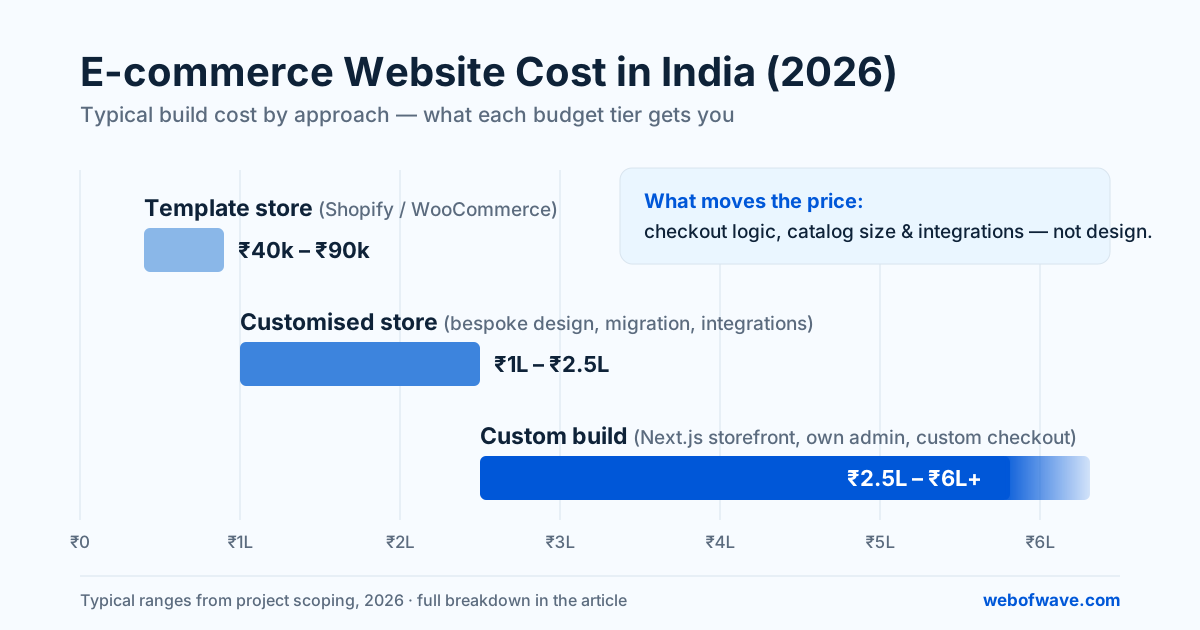
Notice what's not driving those tiers: how pretty the site is. Design polish matters, but two stores that look identical can differ in cost by 4x because of what's happening underneath — the checkout, the integrations, the admin.
What actually moves the price
When we scope a store, these are the questions that swing the quote — usually in this order.
1. Catalog size and structure
Fifty products with simple variants is a different project from three thousand SKUs with size charts, bundles, and per-region pricing. It's not just data entry — a large catalog needs search that works, filters that don't choke, and category pages that load fast. Somewhere around a few hundred products, the "cheap template" approach starts to creak.
2. Checkout and payments
A standard Razorpay or Cashfree integration with UPI, cards, and netbanking is well-trodden ground and doesn't cost much. Costs climb when you need things the platform doesn't do out of the box: partial COD with prepaid discounts, GST invoices generated at checkout, split payments, subscription billing, or a checkout that behaves differently for B2B buyers. Every one of those is custom logic, and custom logic is where budgets actually live.
3. Integrations
Shipping aggregators (Shiprocket, Delhivery), WhatsApp order notifications, marketplace sync, Tally or an ERP, a loyalty program — each integration is real work, and each one you add after launch tends to cost more than if it were scoped upfront. Make the list early, even the "phase 2" items.
4. Migration
Moving an existing store is its own line item. Product data, customer accounts, order history, and — critically — SEO redirects so your Google rankings don't evaporate on launch day. If you're switching platforms, budget for migration explicitly and read up on how to redesign without losing SEO before anyone touches the old site.
5. Who's building it
A freelancer, a small studio, and a large agency will quote very different numbers for the same brief. Freelancers are cheapest but you're betting on one person's availability. Agencies bring process and a team but you pay for their overhead. Studios like ours sit in between. There's no universally right answer — but there is a wrong one: choosing purely on the lowest quote and paying twice when the first build can't scale.
Shopify vs custom: the honest cost comparison
This deserves its own section because the upfront price hides the real picture.
A Shopify store is genuinely cheaper to launch. But look at year one in total:
| Cost | Shopify store | Custom (Next.js) store |
|---|---|---|
| Build | ₹40,000 – 1.5 lakh | ₹2.5 – 6 lakh |
| Platform fee | ₹2,000 – 8,000/month | ₹0 |
| Apps/plugins | ₹1,500 – 10,000/month | Mostly ₹0 (built in) |
| Hosting | Included | ₹0 – 5,000/month |
| Transaction fees | Gateway + Shopify's cut on some plans | Gateway only |
Run the numbers over three years at real order volumes and the gap narrows a lot — sometimes it inverts. That's not an argument that everyone should go custom. It's an argument for doing the arithmetic with your volumes instead of comparing sticker prices.
The cheapest store is the one priced against your third year of orders, not your first month of ownership.
Our general advice: if you're validating a new product, start on Shopify and don't overthink it. If you're already doing steady volume, hitting platform limits, or your checkout needs don't fit the standard mold, a custom e-commerce build starts paying for itself surprisingly fast.
The hidden costs nobody puts in the quote
These are the ones that generate the "wait, that's extra?" phone calls:
- Content and photography. Product photos, descriptions, size guides. The site can be ready while the catalog content isn't — and the launch waits on content far more often than on code.
- Payment gateway charges. Roughly 2% of every transaction, forever. At ₹10 lakh/month in sales, that's ₹20,000/month that no build quote mentions.
- App subscription creep (Shopify specifically). Reviews app, bundles app, back-in-stock app... stores routinely wake up to ₹8,000–12,000/month in apps added one "cheap" subscription at a time.
- Maintenance. Plugins need updates, integrations break when third parties change their APIs, and someone has to be on the hook for it. Budget something monthly, even if it's small.
- Marketing. Not a website cost, but the most common budgeting mistake we see is spending the entire budget on the build and launching with ₹0 to bring anyone to it.
How to budget sensibly in 2026
Start from your unit economics, not from a features wishlist. If your average order is ₹800 with thin margins, a ₹5 lakh build has to move a lot of orders before it makes sense — start lean. If your average order is ₹8,000 and checkout friction is costing you real money, under-investing in the store is the expensive choice.
Then get quotes scoped against a written list: catalog size, payment methods, shipping rules, integrations, migration needs. Vague briefs get padded quotes — specificity is the cheapest cost-reduction tool there is.
And finally, leave 15–20% of the budget unallocated. Every store project discovers something mid-build — a tax edge case, a shipping rule, an integration quirk. The projects that go smoothly aren't the ones where nothing surprises anyone; they're the ones that budgeted for the surprise.
Want help putting this into practice? See our E-commerce Development service or get a free audit.